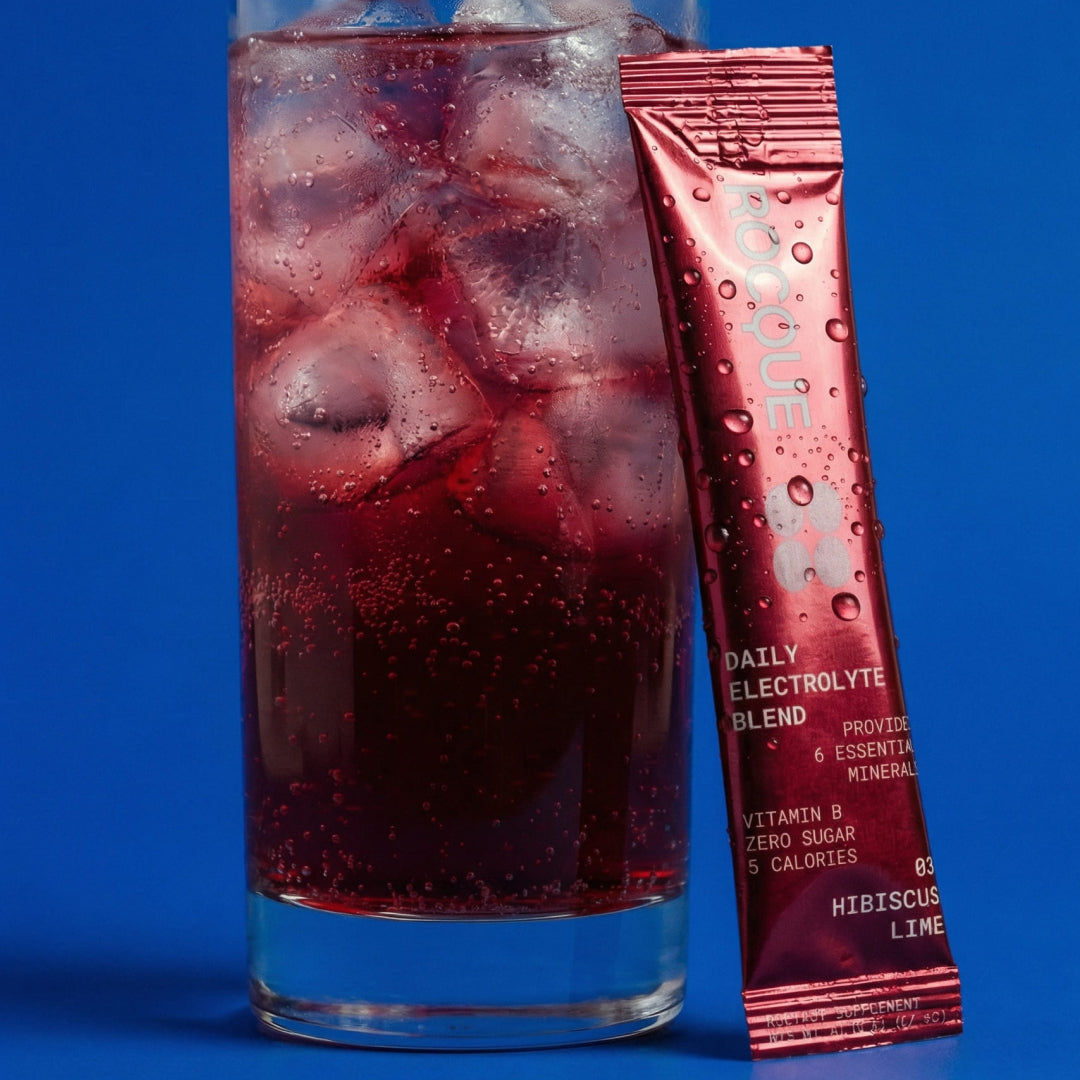
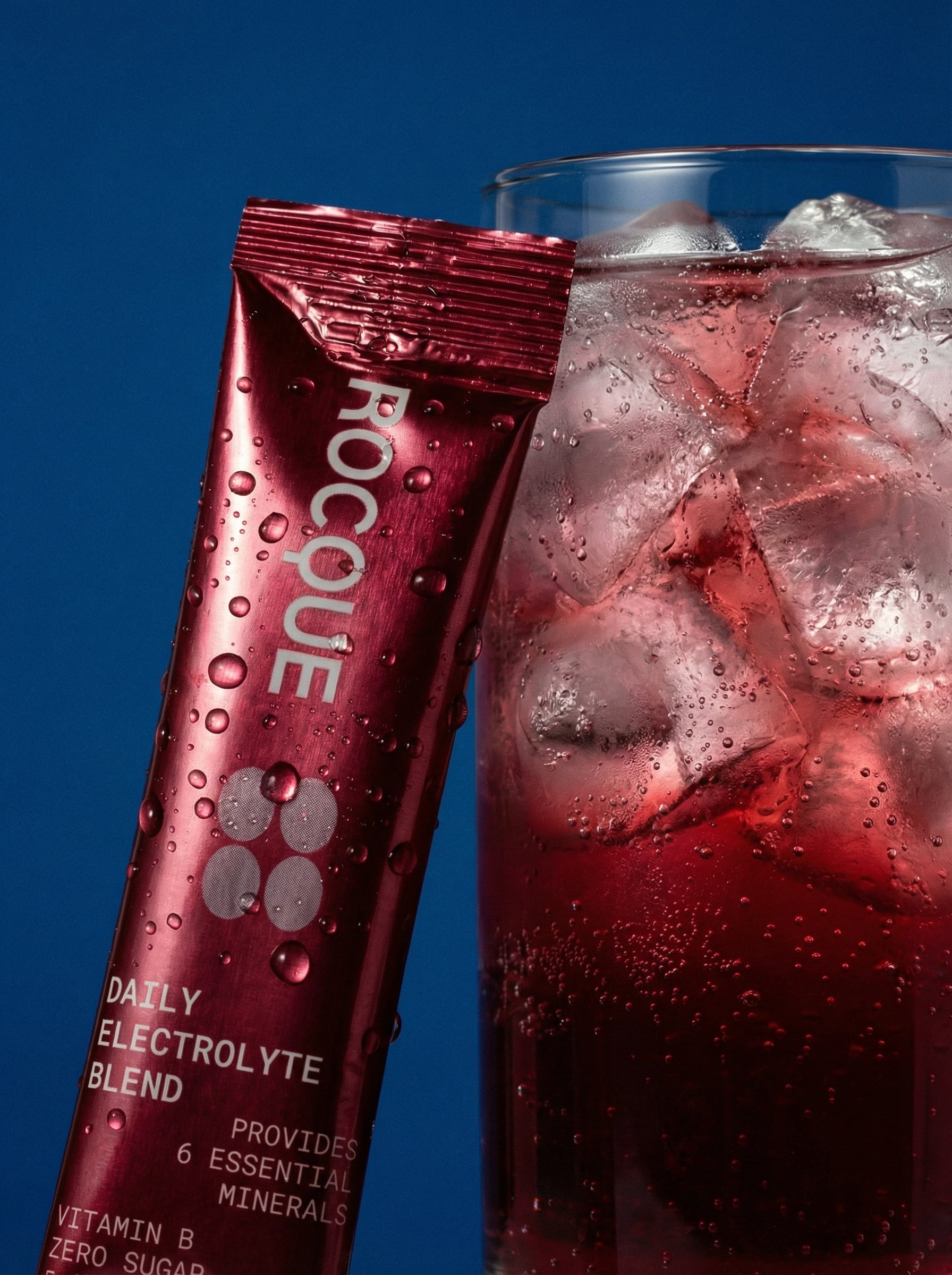

Sie haben Seren ausprobiert. Feuchtigkeitscremes. Teure Behandlungen mit Inhaltsstoffen, die Sie nicht aussprechen können. Und trotzdem strahlt Ihre Haut noch nicht so, wie Sie es sich wünschen.
Hier ist eine Möglichkeit, die Sie vielleicht noch nicht in Betracht gezogen haben: Das Problem liegt nicht darin, was Sie auf Ihre Haut auftragen. Es liegt in dem, was in Ihrem Körper vor sich geht.
Elektrolyte – die Mineralstoffe, die für die Hydratation auf Zellebene verantwortlich sind – spielen eine entscheidende Rolle für die Hautgesundheit. Ein Ungleichgewicht der Elektrolyte macht sich auf der Haut bemerkbar. Trockenheit, fahler Teint, vorzeitige Hautalterung und verzögerte Wundheilung können allesamt auf Mineralstoffungleichgewichte zurückzuführen sein.
In diesem Ratgeber erfahren Sie, wie Elektrolyte Ihre Haut von innen heraus beeinflussen. Wir erklären, welche Mineralien besonders wichtig sind, wie Dehydrierung die Hautzellen schädigt und geben Ihnen praktische Tipps für einen gesunden Teint durch optimale Feuchtigkeitszufuhr. Teure Cremes sind nicht nötig.
Die Bedürfnisse Ihrer Haut verstehen
Die Haut ist das größte Organ des Körpers. Sie dient als Barriere gegen die Außenwelt und spiegelt gleichzeitig wider, was im Inneren vor sich geht.
Hautzellen müssen sich ständig erneuern. Die äußerste Hautschicht – die Epidermis – erneuert sich etwa alle 28 Tage vollständig. Dieser Prozess benötigt Energie, Nährstoffe und ausreichend Flüssigkeit.
Unter der Epidermis liegt die Dermis, in der Kollagen und Elastin für die strukturelle Stütze sorgen. Diese Proteine verleihen der Haut ihre Festigkeit und Elastizität. Für den Erhalt ihrer Struktur benötigen sie ein ausgewogenes Mineralstoffgleichgewicht.
Die tiefste Schicht, die Unterhaut (Hypodermis), enthält Fettzellen und Bindegewebe. Sie beherbergt außerdem Blutgefäße, die die darüber liegenden Schichten mit Nährstoffen und Flüssigkeit versorgen.
Jede Schicht benötigt ausreichende Flüssigkeitszufuhr, um richtig zu funktionieren. Und Flüssigkeitszufuhr hängt, wie wir sehen werden, von Elektrolyten ab.
Wie Elektrolyte die Hautgesundheit beeinflussen
Elektrolyte sind nicht nur für Sportler wichtig. Diese essenziellen Mineralstoffe regulieren den Flüssigkeitshaushalt im gesamten Körper – einschließlich der Haut.
Natrium und Hautfeuchtigkeit
Natrium ist der wichtigste Elektrolyt, der die Flüssigkeitsverteilung außerhalb der Zellen reguliert. Es trägt dazu bei, zu bestimmen, wie viel Wasser der Körper speichert und wohin dieses Wasser verteilt wird.
Sinkt der Natriumspiegel zu stark, kann der Körper Wasser nicht mehr richtig speichern. Selbst bei ausreichender Flüssigkeitszufuhr trocknen die Hautzellen aus. Die Folge ist trockene, gespannte Haut, der es an Spannkraft mangelt.
Umgekehrt trägt eine ausreichende Natriumzufuhr dazu bei, dass die Hautzellen ihren Feuchtigkeitsgehalt bewahren. Das Wasser bleibt dort, wo es hingehört, anstatt durch übermäßiges Wasserlassen oder Schwitzen verloren zu gehen.
Die Haut enthält außerdem Natriumkanäle, die den Feuchtigkeitshaushalt an der Hautoberfläche regulieren. Diese Kanäle tragen dazu bei, die natürliche Feuchtigkeitsbarriere der Haut – die Lipidschicht, die Wasserverlust verhindert – aufrechtzuerhalten.
Kalium und Zellfunktion
Kalium und Natrium tragen gemeinsam zur Aufrechterhaltung des richtigen Flüssigkeitshaushalts in den Zellen bei. Während Natrium den Wasserhaushalt außerhalb der Zellen reguliert, reguliert Kalium den Wasserhaushalt innerhalb der Zellen.
Hautzellen mit ausreichend Kalium behalten ihre Struktur und Funktion besser. Sie sind praller, widerstandsfähiger und können Reparaturprozesse besser durchführen.
Kalium spielt auch eine Rolle für die Funktion der Zellmembranen. Gesunde Zellmembranen gewährleisten einen effizienten Nährstoffaustausch und die effiziente Abgabe von Abfallstoffen. Bei Kaliummangel verlangsamt sich dieser Austausch, und die Zellen – einschließlich der Hautzellen – leiden darunter.
Nach jeder Zellaktivität unterstützt Kalium die Zellen dabei, sich zu regenerieren und auf den nächsten Zyklus vorzubereiten. Diese kontinuierliche Erneuerung ist essenziell für eine gesunde, strahlende Haut.
Magnesium und Hautregeneration
Magnesium ist an über 300 enzymatischen Reaktionen im Körper beteiligt. Viele davon beeinflussen die Hautgesundheit direkt.
Für die Kollagensynthese wird Magnesium benötigt. Bei unzureichender Magnesiumzufuhr kann der Körper Kollagen nicht effizient produzieren. Da Kollagen der Haut ihre Struktur verleiht, kann ein Magnesiummangel zu Erschlaffung und Faltenbildung beitragen.
Magnesium besitzt zudem entzündungshemmende Eigenschaften. Chronische, unterschwellige Entzündungen beschleunigen die Hautalterung und können Hauterkrankungen wie Akne, Ekzeme und Rosacea verschlimmern. Eine ausreichende Magnesiumzufuhr trägt dazu bei, Entzündungen einzudämmen.
Magnesium fördert zudem die Schlafqualität. Schlafmangel ist verheerend für die Haut – gerade in dieser Zeit finden die meisten Reparatur- und Regenerationsprozesse statt. Studien zeigen, dass der Spiegel der Stresshormone bei gar keinem Schlaf im Vergleich zu acht Stunden Schlaf um 21 % ansteigt (Lamon et al., 2021).
Kalzium und Hautbarrierefunktion
Kalzium ist für die Differenzierung der Hautzellen und die Barrierefunktion unerlässlich.
Während die Hautzellen reifen und sich zur Hautoberfläche bewegen, steuern Kalziumsignale ihre Entwicklung. Ein angemessener Kalziumspiegel gewährleistet die korrekte Reifung der Zellen und die Bildung einer starken Schutzbarriere.
Die äußerste Hautschicht enthält spezielle Lipide, die den Wasserverlust verhindern. Kalzium reguliert die Produktion und Organisation dieser Lipide. Bei Kalziummangel wird die Hautbarriere geschwächt, was zu vermehrtem Wasserverlust und trockener Haut führt.
Kalzium spielt auch bei der Wundheilung eine Rolle. Es ist an der Blutgerinnung und den frühen Phasen der Gewebereparatur beteiligt. Hautverletzungen heilen langsamer, wenn Kalziummangel herrscht.
Zink und Hautintegrität
Zink ist zwar im klassischen Sinne kein Elektrolyt, wird aber aus gutem Grund häufig in hochwertigen Elektrolytformeln verwendet.
Zink ist für die Hautgesundheit unerlässlich. Es ist an der Kollagensynthese, der Wundheilung und dem Schutz vor UV-Schäden beteiligt. Zudem besitzt es entzündungshemmende und antibakterielle Eigenschaften, die bei der Behandlung von Akne helfen.
Zinkmangel ist relativ häufig und zeigt sich deutlich an der Haut. Zu den Symptomen gehören verzögerte Wundheilung, Dermatitis und eine erhöhte Infektanfälligkeit.
Der Zusammenhang zwischen Dehydrierung und Haut
Dehydrierung lässt die Haut sichtbar altern. Zu verstehen, warum das so ist, erklärt die Bedeutung einer ausreichenden Flüssigkeitszufuhr mit Elektrolyten.
Wie Dehydrierung die Haut schädigt
Bei Flüssigkeitsmangel priorisiert der Körper die Versorgung lebenswichtiger Organe gegenüber der Haut. Die Durchblutung der Haut nimmt ab, da der Körper Wasser für wichtigere Funktionen spart.
Durch die verminderte Durchblutung erreichen weniger Nährstoffe die Hautzellen. Die Sauerstoffversorgung sinkt. Der Abtransport von Stoffwechselprodukten wird weniger effizient. Zellen, die diesem Stress ausgesetzt sind, funktionieren nicht optimal.
Trockene Haut verliert ihre Spannkraft. Feine Linien werden deutlicher sichtbar – nicht, weil sie plötzlich entstanden sind, sondern weil der Haut das Volumen fehlt, um sie zu glätten. Deshalb sehen Menschen oft deutlich älter aus, wenn sie trocken sind.
Auch die Barrierefunktion der Haut wird beeinträchtigt. Eine geschwächte Barriere lässt mehr Wasser entweichen, wodurch ein Teufelskreis zunehmender Austrocknung entsteht.
Warum Trinkwasser allein nicht ausreicht
Sie haben wahrscheinlich schon gehört, dass mehr Wasser trinken das Hautbild verbessert. Das stimmt zwar im Wesentlichen, ist aber nicht die ganze Wahrheit.
Wasser benötigt Elektrolyte, um richtig aufgenommen und in die Gewebe verteilt zu werden. Ohne ausreichend Natrium gelangt ein Großteil des getrunkenen Wassers nicht in die Hautzellen.
Forschungsergebnisse zeigen, dass die Zugabe von Elektrolyten die Flüssigkeitsretention und die Gewebehydratation deutlich verbessert. Studien an Sportlern ergaben, dass eine vollständige Rehydrierung innerhalb von 45 Minuten nach dem Trinken von Wasser mit Natriumzusatz möglich ist, im Vergleich zu deutlich längerer Rehydrierung mit reinem Wasser (Logan-Sprenger et al., 2013).
Speziell für die Haut bedeutet dies, dass eine mit Elektrolyten angereicherte Hydratation das Wasser effizienter dorthin transportiert, wo es benötigt wird, als Wasser allein.
Die Rolle der internen vs. externen Hydratation
Feuchtigkeitscremes und feuchtigkeitsspendende Seren haben ihren Platz. Aber sie können nur begrenzt helfen.
Äußerlich anzuwendende Produkte wirken hauptsächlich auf den obersten Hautschichten. Sie können helfen, Feuchtigkeitsverlust zu verhindern und die Haut vorübergehend aufzupolstern. Sie können die Hautzellen jedoch nicht von innen heraus mit Feuchtigkeit versorgen.
Echte Hautfeuchtigkeit kommt von innen. Wasser und Elektrolyte, die über den Blutkreislauf transportiert werden, erreichen die tiefsten Hautschichten und unterstützen die Zellfunktion von Grund auf.
Betrachten Sie die äußere Feuchtigkeitszufuhr als Pflege und die innere als Grundlage. Sie brauchen beides, aber die Grundlage ist wichtiger.
Anzeichen dafür, dass Ihre Haut mehr Feuchtigkeit benötigt
Woran erkennt man, ob mangelnde Feuchtigkeit die Haut beeinträchtigt? Achten Sie auf diese Anzeichen.
Anhaltende Trockenheit , die auf Feuchtigkeitscremes nicht anspricht, deutet darauf hin, dass das Problem von innen und nicht von außen kommt. Auch die intensivste äußerliche Feuchtigkeitspflege kann ausgetrocknete Zellen nicht reparieren.
Ein fahler, glanzloser Teint deutet oft auf eine schlechte Durchblutung und Zelltrockenheit hin. Gut mit Feuchtigkeit versorgte Haut besitzt eine natürliche Leuchtkraft, die Produkte nicht nachahmen können.
Eine erhöhte Empfindlichkeit kann auf eine geschwächte Hautbarriere hinweisen. Wenn die Barriere aufgrund von Austrocknung geschädigt ist, können Reizstoffe leichter eindringen.
Deutlichere, feine Linien , die plötzlich aufzutreten scheinen, könnten in Wirklichkeit bereits vorhandene Linien sein, die durch Volumenverlust infolge von Austrocknung sichtbar werden.
Eine langsame Wundheilung deutet darauf hin, dass den Zellen die Ressourcen für eine effiziente Reparatur fehlen. Elektrolyte, insbesondere Zink und Magnesium, sind für diesen Prozess unerlässlich.
Ein aufgedunsenes oder geschwollenes Aussehen kann paradoxerweise auf Dehydrierung hindeuten. Wenn der Körper einen Flüssigkeitsmangel feststellt, kann er Wasser im Gewebe einlagern, was zu Schwellungen führt.
Dunkle Augenringe können verschiedene Ursachen haben, doch Dehydrierung ist ein häufiger Faktor. Die dünne Haut um die Augen zeigt den Feuchtigkeitsstatus schnell an.
Elektrolyte für die Haut: Ein praktischer Ansatz
Die Hautgesundheit durch Elektrolyte zu unterstützen, erfordert keine komplizierten Protokolle. So geht's ganz einfach.
Daily Hydration Foundation
Eine regelmäßige tägliche Flüssigkeitszufuhr mit Elektrolyten bildet die Grundlage für die Unterstützung der Haut von innen.
Ein Beutel hochwertiges Elektrolytpulver, morgens mit 500 ml Wasser vermischt, liefert die grundlegende Mineralstoffversorgung. Dies deckt den täglichen Bedarf und unterstützt die normale Funktion der Hautzellen.
Trinken Sie über den Tag verteilt ausreichend Wasser – idealerweise etwa 35 ml pro Kilogramm Körpergewicht. So stellen Sie eine gleichmäßige Flüssigkeitszufuhr sicher und vermeiden starke Schwankungen.
Erhöhter Bedarf
In bestimmten Situationen ist eine erhöhte Elektrolytzufuhr erforderlich.
Beim Sport verliert der Körper durch Schwitzen Wasser und Mineralstoffe. Bei Trainingseinheiten von mehr als einer Stunde oder besonders intensiven Einheiten empfiehlt sich ein zweites Elektrolyt-Päckchen. Ein Flüssigkeitsverlust von 2 % kann verschiedene Leistungsparameter um 5–8 % reduzieren (Savoie et al., 2015) – und auch die Haut leidet.
Bei heißem Wetter verliert man auch ohne körperliche Anstrengung mehr Elektrolyte durch Schwitzen. Die Zufuhr sollte entsprechend erhöht werden.
Bei Krankheit , insbesondere bei Fieber, Erbrechen oder Durchfall, beschleunigen sich die Elektrolytverluste dramatisch.
Alkoholkonsum wirkt entwässernd und führt zu einem Mineralstoffverlust. Deshalb sieht die Haut nach dem Trinken oft schlechter aus.
Während Flugreisen ist die Kabinenluft extrem trocken, was zu einem unmerklichen Wasserverlust über die Haut führt.
Worauf Sie bei einer Elektrolytformel achten sollten
Nicht alle Elektrolytprodukte sind gleichermaßen vorteilhaft für die Haut.
Ein vollständiges Mineralstoffprofil ist wichtig. Achten Sie auf Produkte, die Natrium, Kalium, Magnesium, Kalzium, Phosphor und Chlorid – alle sechs essenziellen Elektrolyte – enthalten. Viele Produkte sparen hier an der Nährstoffversorgung und liefern nur ein oder zwei Mineralstoffe.
Die richtige Dosierung ist entscheidend. Ein Produkt mit nur Spuren von Mineralien bringt keine Wirkung. Achten Sie auf sinnvolle Mengen pro Portion.
Der Verzicht auf Zuckerzusatz ist wichtig. Zucker verursacht Glykation – ein Prozess, der Kollagen schädigt und die Hautalterung beschleunigt. Süßstoffe wie Stevia sind schonendere Alternativen.
Zusätzliche Nährstoffe können die positiven Effekte verstärken. Vitamin C unterstützt die Kollagensynthese. B-Vitamine fördern die zelluläre Energieproduktion. Zink unterstützt die Hautregeneration. Hochwertige Produkte enthalten diese Nährstoffe häufig.
Lebensstilfaktoren, die die Hautfeuchtigkeit beeinflussen
Elektrolyte wirken am besten in Kombination mit einem förderlichen Lebensstil.
Schlaf und Hautregeneration
Im Schlaf regeneriert sich die Haut am meisten. Die Freisetzung von Wachstumshormonen im Tiefschlaf regt die Zellregeneration und die Kollagenproduktion an.
Forschungen belegen, dass Schlafmangel die Regeneration erheblich beeinträchtigt. Studien zeigen, dass Schlafentzug die Erholung der Reaktionszeit um 9,6 % und der Sprunghöhe um 11,1 % verringert (Skein et al., 2013). Eine ähnliche Beeinträchtigung betrifft die Regeneration der Hautzellen.
Magnesium trägt insbesondere zu einer besseren Schlafqualität bei, indem es dem Nervensystem hilft, sich zu entspannen. Ein abendliches Elektrolytgetränk mit ausreichend Magnesium kann sowohl den Schlaf als auch die Hautgesundheit fördern.
Stressmanagement
Chronischer Stress erhöht den Cortisolspiegel, was nachweislich negative Auswirkungen auf die Haut hat. Cortisol baut Kollagen ab, steigert die Talgproduktion (wodurch Akne möglicherweise verschlimmert wird), beeinträchtigt die Barrierefunktion der Haut und verlangsamt die Wundheilung.
Der Elektrolythaushalt beeinflusst die Stressreaktion. Ausreichend Magnesium trägt zur Regulierung des Cortisolspiegels bei. Ein angemessener Natriumspiegel beugt dem zusätzlichen Stress durch Elektrolytmangel vor.
Studien zeigen, dass Menschen mit Schlaflosigkeit ein doppelt so hohes Risiko haben, an Depressionen zu erkranken, wie Menschen ohne Schlafstörungen (Baglioni et al., 2011). Dieser Zusammenhang zwischen Stress und Schlaf hat erhebliche Auswirkungen auf die Hautgesundheit.
Ernährungsqualität
Was Sie essen, beeinflusst den Elektrolythaushalt Ihrer Haut und Ihre allgemeine Gesundheit.
Verarbeitete Lebensmittel enthalten oft Natrium, aber wenige andere wichtige Mineralstoffe. Eine Ernährung mit einem hohen Anteil an verarbeiteten Lebensmitteln kann zu Ungleichgewichten führen – einem zu hohen Natriumgehalt im Verhältnis zu Kalium und Magnesium.
Vollwertige Lebensmittel liefern Mineralstoffe in einem ausgewogeneren Verhältnis. Obst, Gemüse, Nüsse und Samen liefern neben ihrem Wassergehalt Kalium, Magnesium und andere hautpflegende Nährstoffe.
Allerdings kann selbst eine gesunde Ernährung nicht bei jedem Menschen einen optimalen Elektrolythaushalt gewährleisten. Nahrungsergänzungsmittel können Lücken schließen, die durch die Ernährung allein möglicherweise nicht abgedeckt werden.
Sonnenschutz
UV-Schäden sind die Hauptursache für sichtbare Hautalterung. Auch reichliche Feuchtigkeitszufuhr kann Sonnenschäden nicht rückgängig machen.
Gut mit Feuchtigkeit versorgte Haut verfügt jedoch über eine besser funktionierende Hautbarriere und bietet dadurch einen gewissen natürlichen Schutz. Ausreichend Zink trägt ebenfalls zum Schutz vor UV-Schäden bei.
Kombinieren Sie gute Trinkgewohnheiten mit der konsequenten Anwendung von Sonnenschutzmitteln für einen umfassenden Hautschutz.
Die langfristige Perspektive
Hautveränderungen geschehen nicht über Nacht. Genauso wenig wie Verbesserungen durch bessere Trinkgewohnheiten.
Geben Sie Ihrer neuen Elektrolyt-Routine mindestens 28 Tage Zeit – einen vollständigen Hauterneuerungszyklus – bevor Sie sichtbare Ergebnisse erwarten. Die Zellhydratation verbessert sich zwar innerhalb weniger Tage, aber bis sich dies in sichtbaren Hautveränderungen niederschlägt, braucht es Zeit.
Regelmäßigkeit ist wichtiger als Intensität. Gelegentliches Trinken von Elektrolyten erzielt nicht die gleichen Ergebnisse wie die tägliche Einnahme. Machen Sie es zu einer Gewohnheit, anstatt es nur sporadisch zu tun.
Verfolgen Sie Ihre Fortschritte anhand von Fotos, die bei gleichbleibenden Lichtverhältnissen aufgenommen wurden. Es ist schwierig, allmähliche Verbesserungen im Alltag zu erkennen, aber der Vergleich von Fotos im Abstand von mehreren Wochen zeigt die Veränderungen deutlich.
Das Wichtigste zu Elektrolyten und Hautgesundheit
Schöne Haut kommt von innen. Kein Hautpflegeprodukt kann die Wirkung einer optimalen inneren Feuchtigkeitsversorgung ersetzen.
Elektrolyte sorgen dafür, dass das Trinkwasser auch tatsächlich Ihre Hautzellen erreicht. Sie versorgen Ihre Haut mit den Mineralien, die sie für Struktur, Reparatur und Barrierefunktion benötigt. Sie tragen dazu bei, die Spannkraft und Vitalität zu bewahren, die keine Creme vortäuschen kann.
Die Vorgehensweise ist einfach. Trinken Sie täglich mit Elektrolyten angereichertes Wasser – ein Beutel für den täglichen Bedarf. Ergänzen Sie Ihre Zufuhr bei erhöhtem Bedarf. Wählen Sie eine Vollwertformel ohne unnötigen Zucker.
Ihre Haut wird die Veränderung widerspiegeln. Nicht über Nacht, aber stetig und deutlich.
Manche der wirksamsten Maßnahmen für Ihre Gesundheit sind auch die einfachsten. Ausreichende Flüssigkeitszufuhr mit Elektrolyten gehört dazu.
Referenzen
Baglioni, C., et al. (2011). Schlaflosigkeit als Prädiktor für Depression: Eine Metaanalyse longitudinaler epidemiologischer Studien. Journal of Affective Disorders , 135(1-3), 10-19.
Lamon, S., et al. (2021). Der Einfluss akuten Schlafentzugs auf die Skelettmuskelproteinsynthese und das hormonelle Milieu. Physiological Reports , 9(1), e14660.
Logan-Sprenger, H. M. & Spriet, L. L. (2013). Die akuten Auswirkungen der Flüssigkeitszufuhr auf das spezifische Gewicht des Urins und die Flüssigkeitsretention bei leichter Dehydratation. Journal of Strength and Conditioning Research , 27(4), 1002–1008.
Savoie, FA, et al. (2015). Einfluss von Dehydratation auf Muskelausdauer, Kraft, anaerobe Leistungsfähigkeit und Kapazität. Sports Medicine , verschiedene Studien zusammengefasst.
Skein, M., et al. (2013). Der Einfluss von nächtlichem Schlafentzug nach Rugby-League-Spielen auf die physiologische und wahrnehmungsbezogene Erholung nach dem Spiel. International Journal of Sports Physiology and Performance , 8(5), 556-564.